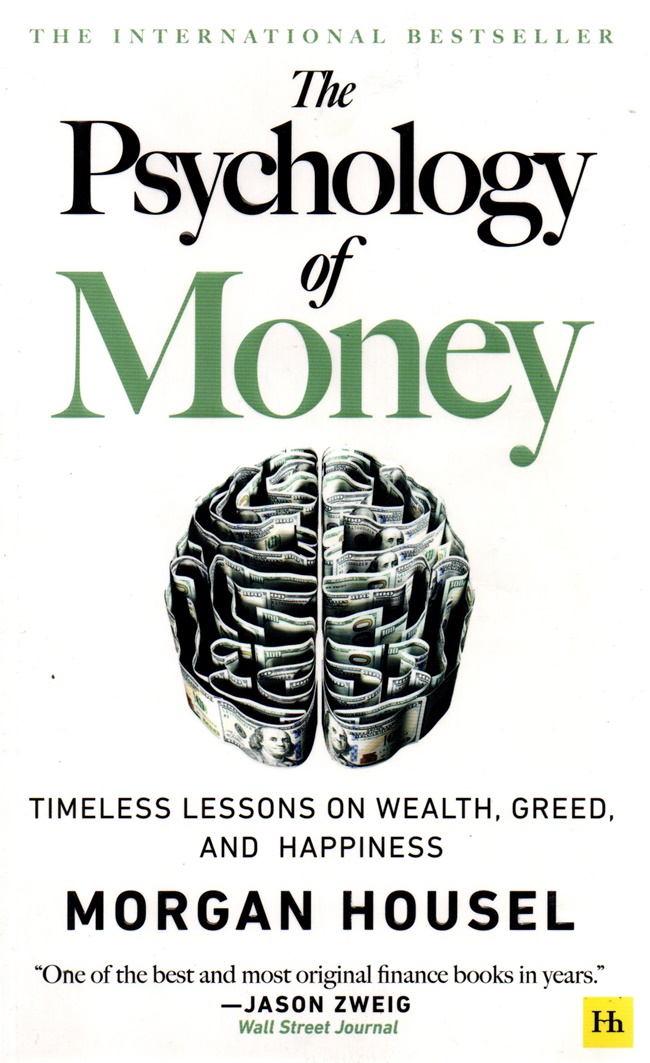
Merangkum #2: Psychology of Money
20 key points from The Psychology of Money by Morgan Housel. Each point is condensed into 2–3 short sentences for clarity and brevity.
1. No One’s Crazy
Everyone’s financial decisions make sense in the context of their own unique life experiences, even if they seem irrational to others.
Your personal history with money shapes maybe 80% of how you view the world, while representing a tiny fraction of all events.
Judging others’ choices without understanding their background leads to misunderstanding.
2. Luck & Risk
Luck and risk are two sides of the same coin—outcomes in life and investing are heavily influenced by forces beyond individual effort.
Success stories often hide massive luck, while failures may involve bad luck rather than poor skill.
Respect both to avoid over- or under-estimating people’s achievements.
3. Never Enough
The hardest financial skill is knowing when you have “enough” and stopping the goalpost from moving.
Greed and social comparison can drive even billionaires to risk everything they have for more.
Happiness comes from results minus expectations—define your own enough to stay content.
4. Confounding Compounding
Compounding is the most powerful force in finance, but its effects are underestimated because they require long periods of time.
Small, consistent growth can lead to extraordinary results that seem to defy logic.
The real key is patience and letting money work uninterrupted for decades.
5. Getting Wealthy vs. Staying Wealthy
Getting wealthy requires optimism, risk-taking, and aggression; staying wealthy demands humility, fear, and paranoia about losses.
Many people master the first part but fail at the second because the skills are opposites.
Survival and longevity matter more than short-term big wins.
6. Tails, You Win
In investing and business, a small number of extreme positive outcomes (tails) drive most of the overall returns.
You don’t need to be right most of the time—just avoid ruin and capture a few big winners.
Focus on broad patterns rather than individual stories, as outliers are often luck-driven.
7. Freedom
The highest form of wealth is having control over your time—being able to do what you want, when you want.
Money’s greatest value is buying freedom and independence rather than material goods.
Many chase luxury but undervalue the quiet power of autonomy.
8. Man in the Car Paradox
People often desire expensive cars or watches not for the item itself, but for the respect and admiration they hope it signals to others.
Wealthy people rarely impress others as much as we assume—admiration usually goes to the person, not the possessions.
True respect comes from character and actions, not displays of money.
9. Wealth is What You Don’t See
Wealth is the money you have saved and not spent, not the visible luxuries or income people flaunt.
Rich-looking lifestyles often hide high spending and low actual savings.
Building wealth means living below your means, even if it looks modest from the outside.
10. Save Money
Saving is more powerful than earning a high income because it gives you options and flexibility.
How much you save matters far more than how much you earn or invest returns in the short term.
Save without a specific goal—treat it as a buffer for the unknown future.
11. Reasonable > Rational
In real life, “reasonable” behavior that lets you sleep at night beats purely mathematical “rational” strategies.
People are emotional, so strategies must account for psychology, not just spreadsheets.
Sustainability and sticking with a plan matter more than theoretical optimality.
12. Surprise!
The world changes in unpredictable ways—history is a lousy predictor of the future because new generations face new realities.
Expect the unexpected and build resilience rather than perfect forecasts.
Over-reliance on past patterns leads to painful surprises.
13. Room for Error
Build a margin of safety into your finances and plans to account for uncertainty and mistakes.
Optimism is good, but over-optimism without buffers can wipe you out.
Room for error keeps you in the game when things go wrong.
14. You’ll Change
Your goals, desires, and risk tolerance will evolve over time—long-term plans must allow for that.
What you want today may not be what you want in 10 or 20 years.
Build flexibility into your financial life so you can adapt without regret.
15. Nothing’s Free
Everything has a price, including high returns—volatility, drawdowns, and stress are the hidden costs of investing.
There is no such thing as a free lunch in markets or life.
Accept the price or choose a lower-return, calmer path.
16. You & Me
Beware of taking advice from people whose incentives or experiences don’t match yours.
What works for someone else may not work for you due to different timelines, risk tolerance, or goals.
Personal finance is deeply personal.
17. The Seduction of Pessimism
Pessimism sounds intelligent and cautious, while optimism can feel naive—yet progress relies on optimism.
Media and human nature amplify bad news, making the world seem worse than it is.
Balanced optimism combined with preparation wins over chronic pessimism.
18. When You’ll Believe Anything
Stories and narratives influence our financial decisions more than cold data.
We are wired to love compelling tales, even if they mislead us.
Be wary of seductive stories that override logic or evidence.
19. All Together Now
Financial success is mostly soft skills—behavior, humility, patience, and emotional control—rather than intelligence or complex knowledge.
Simple, consistent habits beat sophisticated strategies that people abandon.
Mastering your own psychology is the ultimate edge.
20. Confessions
(Or the final reflection) True financial happiness comes from aligning money with what actually matters to you personally—freedom, relationships, and peace of mind.
There are no universal rules; find what works for your life and temperament.
The goal is not to maximize wealth but to live a good life with the wealth you build.
These points highlight that managing money is far more about human behavior than spreadsheets or IQ. Applying them consistently can lead to better decisions and greater peace of mind.